June 11, 2026 Homeworks Hawaii
If you’re thinking about which aging-in-place remodeling features a Hawaii contractor should provide, you’re asking the right question at the right time. Hawaii’s senior population is growing faster than the state’s overall population, and the cost of assisted living on Oahu far exceeds what most families can afford in the long term. For many kupuna and their ohana, staying home isn’t just a preference. It’s the most practical option available.
At Homeworks Construction, we’ve built and remodeled homes on Oahu for over 30 years. We see aging-in-place planning come up across project types: full home remodels, bathroom remodels, kitchen updates, ground-floor additions, and ADU builds for multigenerational households. What the right modifications look like depends on your home’s current layout, your family’s needs, and how far you want to plan ahead.
This article covers the features you should expect a qualified contractor to know how to deliver.
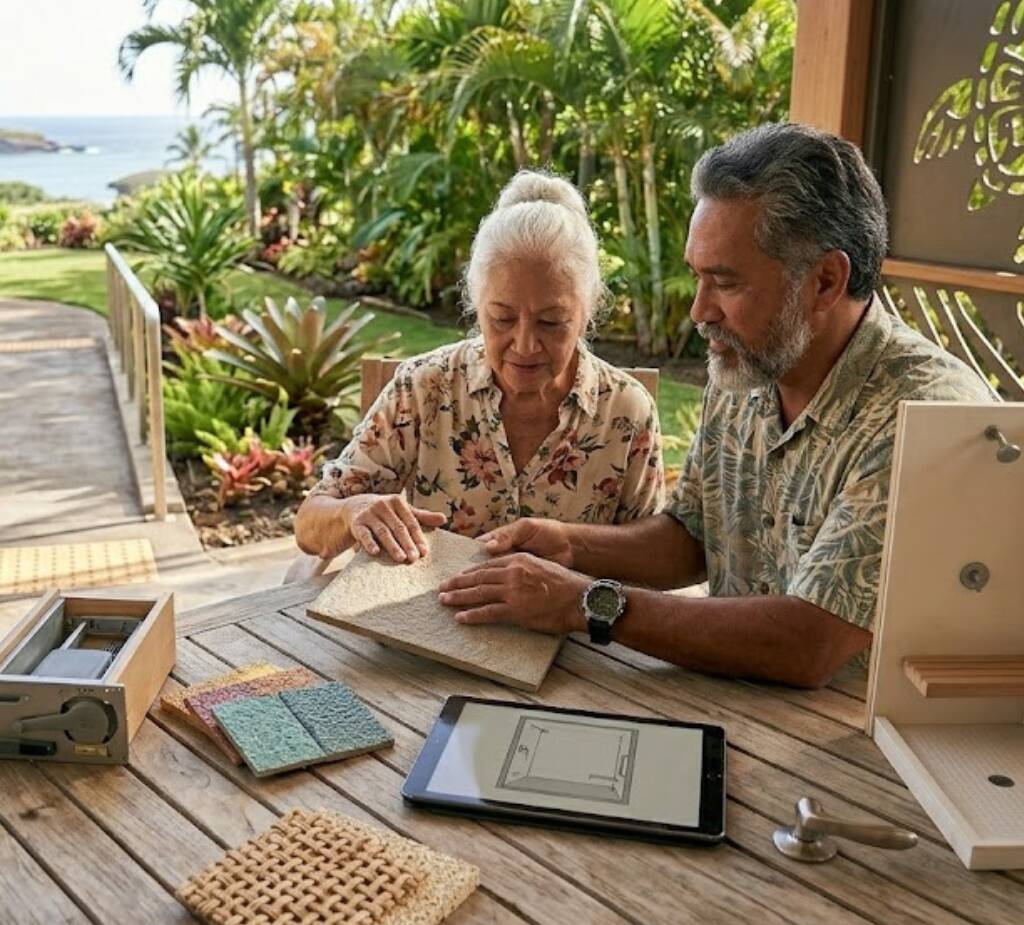
Why Aging-in-Place Remodeling Matters for Hawaii Homeowners
Hawaii presents a specific set of conditions that make staying home a priority for most families here. Nursing home costs on the islands run significantly higher than on the mainland. Senior housing availability hasn’t kept pace with the growth of the kupuna population. And culturally, multigenerational living has always been central to how families in Hawaii care for one another.
Most single-family homes on Oahu were built 50 or more years ago. They were designed before durable medical equipment such as wheelchairs, walkers, and oxygen equipment became common household items. That means a large share of existing homes need real structural work to support safe, independent living as residents age.
The good news is that a thoughtful remodel can address all of that without making your home feel clinical or institutional. Done well, accessibility features look like good design.
Which Aging-in-Place Remodeling Features Should a Hawaii Contractor Provide for Bathrooms
The aging-in-place bathroom is where fall risk is highest. It’s also where the right modifications make the biggest difference for daily independence.
A qualified contractor should offer curbless walk-in showers as a standard option. Stepping over a traditional curb with wet feet is one of the most common causes of bathroom falls. A zero-threshold shower eliminates that hazard entirely and is also a design choice clients of all ages request for its clean, open look.
Your contractor should also install comfort-height toilets, which reduce strain on knees and hips, and non-slip tile flooring throughout the bathroom. Lever-style faucets replace round knobs, which can be difficult for those with reduced hand strength to grip. A handheld showerhead gives someone seated on a bench or shower seat full control of water flow without needing to stand or reach.
Lighting deserves attention too. As eyes age, they need more light but also become more sensitive to glare. A contractor experienced in accessibility remodeling will specify layered lighting in the bathroom rather than a single overhead source.
Grab Bars, Blocking, and Why the Installation Method Matters
Grab bars are one of the most important safety features in any aging-in-place bathroom. But the installation method matters as much as the hardware itself.
Grab bars anchored only into tile or drywall will pull out under body weight during a fall. They need to attach to structural blocking inside the wall. In an older Oahu home, that often means opening the wall, adding blocking at the correct heights, and then patching and finishing before the bar goes in.
Ask any contractor you’re considering whether they install grab bars into structural blocking as standard practice. If they don’t address the blocking question, that’s a gap in their process.
Today’s grab bars also come in a range of finishes, including brushed nickel, matte black, and polished chrome. They don’t have to look like hospital hardware.
Kitchen Accessibility Features Your Hawaii Contractor Should Know How to Build
The kitchen is central to daily life, and it’s one of the areas where thoughtful modifications support independence the longest.
Lower counter sections allow someone in a wheelchair or using a seated work position to prep food without strain. Pull-out shelving replaces fixed shelves that require bending deep into a cabinet. D-ring pulls on cabinet doors are far easier to grip than standard knobs, especially for someone with arthritis.
Appliance placement matters. A second oven at counter height or a microwave positioned below standard height eliminates the need to reach overhead. Outlets repositioned lower allow countertop appliances to sit at more accessible heights.
Under-cabinet task lighting over prep areas makes a real difference for aging eyes. General overhead lighting alone creates shadows on work surfaces. A contractor who understands accessibility will address lighting as part of the kitchen scope, not as an afterthought.
Whole-Home Modifications That Support Barrier-Free Living on Oahu
Beyond the aging-in-place kitchen and bathroom, several structural changes define whether a home truly supports aging in place.
Doorways throughout the home should be at least 36 inches wide to accommodate a wheelchair or walker. Standard doorways in older Hawaii homes are 28 to 30 inches wide. Widening them is straightforward in a remodel if it’s planned from the start.
Hallways need the same attention. A minimum clear width of 36 inches allows for comfortable movement with mobility equipment and makes the home feel more open for everyone.
Flat floor transitions between rooms eliminate the small height changes and thresholds that become serious trip hazards over time. Ramp entries at exterior doors remove the need to step up. Slip-resistant flooring throughout, especially in wet areas, reduces fall risk throughout the home.
Lighting upgrades at stairways, hallways, and entry points are one of the most cost-effective fall prevention modifications you can make. Motion-activated lighting in nighttime pathways between the bedroom and bathroom is a small addition with a meaningful safety impact.
How Universal Design Keeps Aging-in-Place Features from Looking Out of Place
The goal of universal design is to build accessibility into a home so naturally that most people won’t notice it’s there at all.
When a contractor understands universal design principles, wider doorways feel welcoming rather than clinical. Curbless showers read as a luxury finish. Lever handles look like a deliberate hardware choice.
This is the standard you should expect from a qualified Hawaii contractor: accessibility features and good design belong together.
ADUs and Additions as Aging-in-Place Solutions in Hawaii
Sometimes the best aging-in-place solution isn’t a modification to the existing home. It’s a purpose-built unit on the same property.
A ground-floor ADU or addition designed from the start for accessibility gives a kupuna family member their own space with full independence while keeping them close to the rest of the household. That unit should include a curbless shower, wider doorways, lever hardware, a single-floor layout with no interior steps, and accessible kitchen features from day one.
On Oahu, where lots are often small and interiors already push their limits, a well-designed addition or ADU is sometimes more practical than retrofitting an older home. The design-build process lets the team plan structural accessibility requirements from the earliest stage, before any drawings go to permitting. That keeps the project on budget and avoids costly changes later.
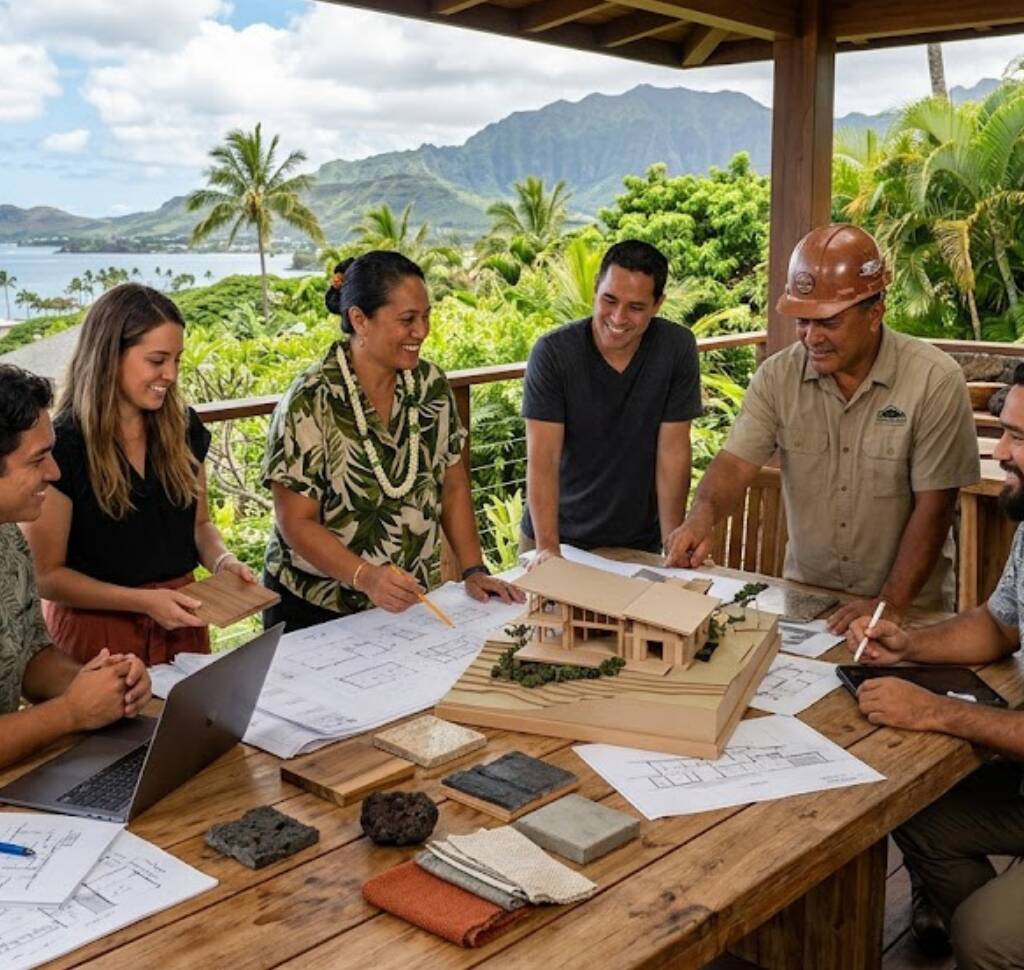
What to Ask a Hawaii Contractor Before Starting an Aging-in-Place Remodel
Before you commit to a contractor, ask direct questions.
Ask how many aging-in-place or accessibility remodels they’ve completed on Oahu. Hawaii homes have specific structural characteristics, lot constraints, and permitting requirements. Local experience matters. Ask, in their opinion, which aging-in-place remodeling features a Hawaii contractor should provide.
Ask whether they install grab bars into structural blocking. Ask whether they design for an ADA-compliant turning radius in bathrooms. Ask how they approach widening doorways in homes with older framing.
Ask whether their team handles both design and construction, or whether you’d be coordinating between separate firms. A design-build contractor keeps both sides of the project aligned from the first conversation through final inspection.
Ask to see examples of past work and to speak with previous clients who had similar projects. A contractor with real experience in this area will welcome those questions.
Understanding which aging-in-place remodeling features a Hawaii contractor should provide gives you the foundation to evaluate who’s actually qualified to do the work. The right contractor will answer these questions specifically, not in generalities.
If you’re ready to talk through what your home needs, request a consultation. We’re happy to walk through your specific situation and help you plan a remodel that works for your family now and for years ahead.