July 2, 2026 Design
If you’ve started planning a home project on Oahu, you’ve likely run into the same question most homeowners here face: do you hire an architect first, or do you go straight to a contractor? The answer shapes everything that follows, from your first budget conversation to the day you get your certificate of occupancy.
At Homeworks Construction, we work as a unified design-build team. Our designers and builders operate under one roof. That structure isn’t an accident. It reflects what we know about building homes in Hawaii, where material logistics, permitting timelines, and local climate conditions make communication between design and construction non-negotiable.
This article breaks down the best practices for in-house architecture in Hawaii design-build projects so you know what a well-run process actually looks like, and what questions to ask before you hire anyone.
What In-House Architecture Means in a Hawaii Design-Build Project
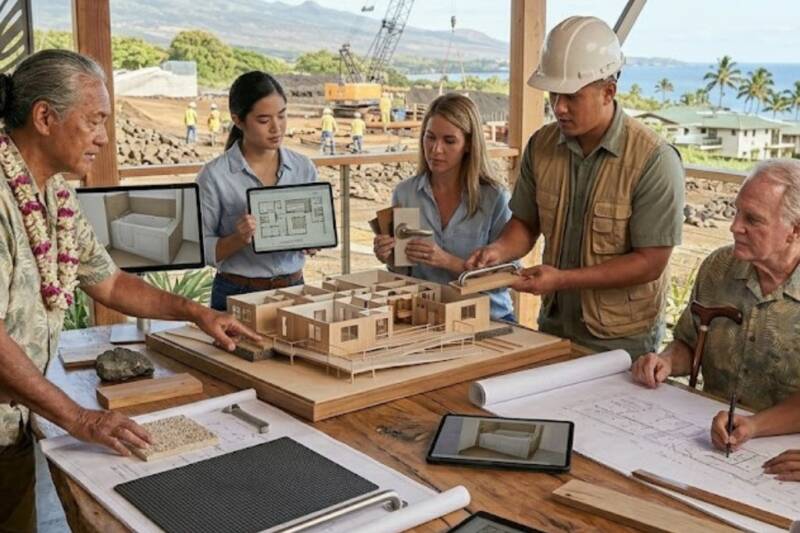
In-house architecture means your designer and your builder are part of the same company. They share the same project files, the same budget targets, and the same accountability to you.
This differs from the traditional approach, where you hire an architect independently and then put their completed plans out to bid. In that model, you act as the go-between. If the bids come back higher than the design allows, you pay for revisions. If the contractor misreads the drawings, the architect isn’t responsible for the cost of fixing them.
In a design-build project, there’s one point of responsibility. The team that designs your home is the same team that builds it. That single-source structure is the foundation of every best practice that follows.
Why Hawaii’s Building Environment Makes In-House Design a Smarter Choice
Building anywhere in Hawaii comes with constraints you won’t find on the mainland. Materials arrive by container ship. Lead times on custom cabinetry can run six to twelve months. The Honolulu Department of Planning and Permitting has its own review process and standards, and plans that don’t meet local requirements are sent back for corrections.
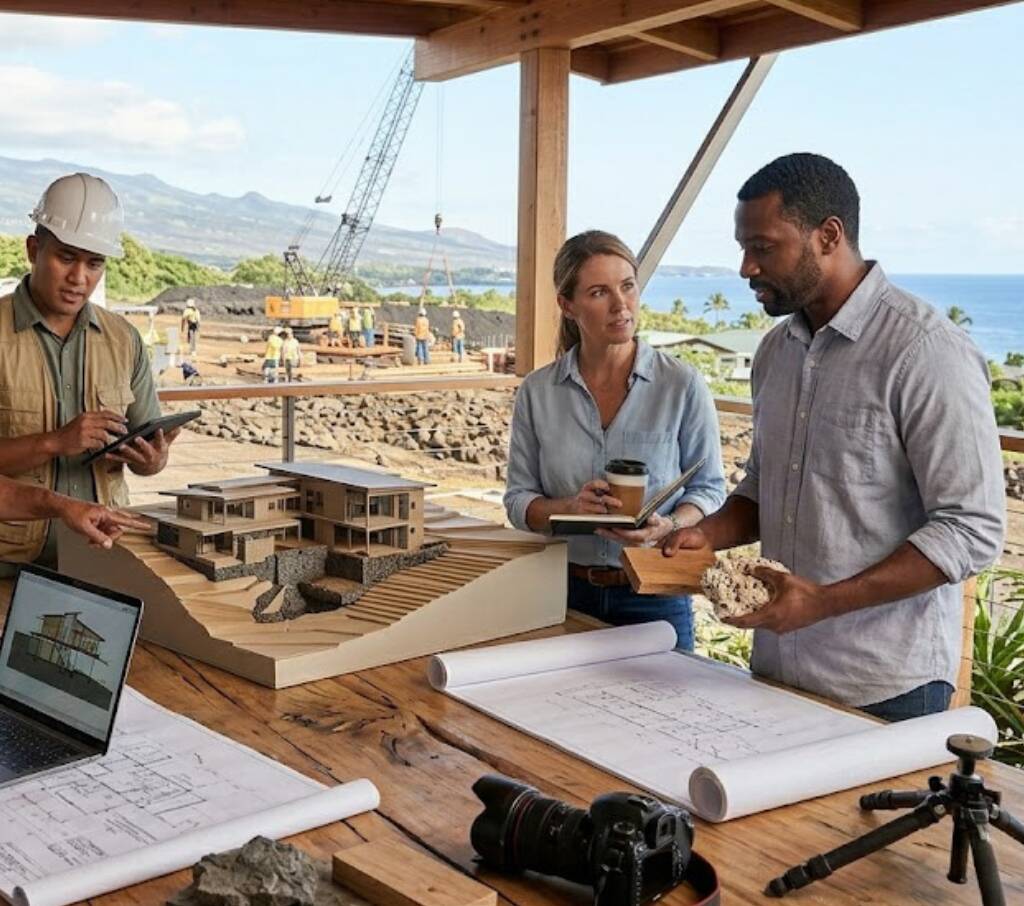
An in-house team knows this environment. They design around what’s actually available on island, not what looks good in a catalog. They write permit-ready documents from the start. And because they’ve pulled permits in Honolulu before, they know which details reviewers most often flag.
That practical knowledge keeps your project moving when other projects stall.
How Hawaii’s Climate Shapes Every Architectural Decision
Oahu’s climate varies significantly by location. Windward sides of the island receive more rainfall and require steeply pitched roofs, wider eaves, and raised foundations. Leeward properties experience more heat and require cross-ventilation strategies, deep overhangs, and heat-reflective materials.
Salt air near the coast corrodes standard hardware and accelerates wear on certain finishes. High humidity affects everything from framing choices to HVAC design.
A designer who works separately from your builder may produce technically correct drawings that don’t account for your property’s specific microclimate. An in-house architecture team considers site orientation, trade-wind exposure, and material durability together because the builder in the same office will be the one sourcing and installing those materials.
How Oahu’s Permit Process Rewards a Design-Build Approach
Permit delays frustrate homeowners on Oahu more than almost any other part of the process. Plans go in, corrections come back, revisions take time, and your project sits.
An in-house design team prepares documents that reflect real construction methods, because the builder who will execute the work reviews the plans before they go to the city. That reduces the number of correction cycles. It also allows the team to begin ordering long-lead items, like custom windows or specialty tile, while the permit is still under review. You lose less time waiting.
Core Best Practices for In-house Architecture in Hawaii Design-build Projects
The best practices for in-house architecture all trace back to one principle: design and construction decisions should occur together, not sequentially. Here’s what that looks like in practice:
Start with a clear project scope before any design work begins. Define what you want, what your priorities are, and what your budget is. A good in-house team won’t let you leave that first conversation without realistic numbers on the table.
Keep design decisions tied to cost checks at every stage. Material selections, structural choices, and layout changes all affect the final number. When design and construction share a team, those cost checks happen in real time rather than as a surprise at the end.
Involve the builder in design reviews before plans are finalized. This catches unbuildable details early. It also catches features that are technically possible but disproportionately expensive given Hawaii’s labor and material costs.
Document everything in a shared system. The best in-house teams maintain project files that both the design and construction sides can access. That reduces miscommunication and gives you a clear record of every decision made.
How In-House Architecture Protects Your Oahu Home Project From Common Risks
The biggest risks in any home project come from gaps between design and construction. Change orders occur when a builder finds something in the plans that doesn’t match site conditions or can’t be built as drawn. In a traditional setup, you often pay for those changes even when the fault lies in the original design.
In a design-build project, the firm owns the entire process. Internal miscommunications don’t become your problem. The team is accountable for what they design and for what they build.
Deep relationships with local suppliers also matter here. An in-house team that has worked with Oahu vendors for years knows where to find materials at the best price and which items are in stock. Designing around local availability keeps costs down and schedules on track.
Applying In-House Architecture Principles to Specific Project Types in Hawaii
The same best practices for in-house architecture in Hawaii design-build projects apply across different project types, though each one has its own demands.
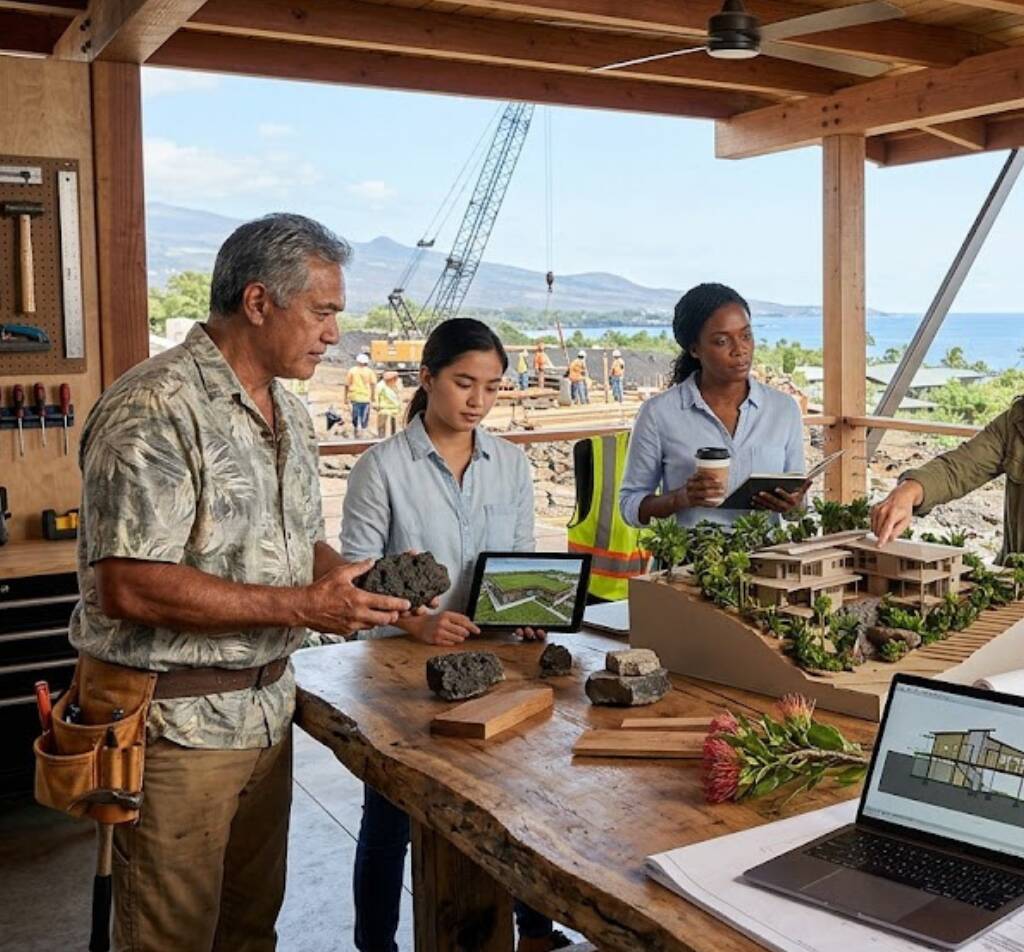
New custom homes require the most thorough pre-construction planning. Every system, every finish, and every structural decision connects to the others. An in-house team can coordinate those decisions from the beginning rather than discovering conflicts mid-build.
ADUs on Oahu are subject to strict zoning requirements. The in-house design process ensures that your accessory dwelling unit fits within your lot’s specific constraints before any drawings are submitted for permitting. Compact, efficient layouts are easier to achieve when the designer understands exactly what the builder can execute.
Additions attach to your existing structure, which means surprises are common once walls open up. An in-house team handles those discoveries more quickly because design adjustments are made in the same conversation as construction decisions.
Kitchen remodels, bath remodels, and lanai projects benefit from the same coordination. Material lead times, structural considerations, and finish selections are all managed as a single, integrated scope rather than as separate vendor conversations.
What to Look for When Choosing a Design-Build Firm With In-House Architecture in Hawaii
Not every firm that calls itself design-build operates with a true in-house architecture team. Ask the right questions before you commit.
Ask to see the pre-construction process in writing. A firm with a real process will walk you through how they move from initial concept to a fixed-price contract. If they give you ballpark numbers over the phone without seeing your property, that’s a gap in their process.
Ask how the design and construction teams communicate on active projects. The answer should be immediate and specific. If design and construction operate in separate departments with limited overlap, you may experience the same communication gaps as the traditional model.
Ask about their local track record. Building in Manoa is different from building in Kailua, and both are different from a hillside lot in Hawaii Kai. A firm with real Oahu experience will talk about your specific location with specificity, not generalities.
Ask who owns the project if something goes wrong. In a true design-build model, the answer is clear. One team, one responsibility.
Applying the best practices for in-house architecture in Hawaii design-build projects means choosing a firm where design and construction aren’t two separate relationships for you to manage. They should already be one team before you walk through the door.
If you’re ready to talk through what your project requires, contact Homeworks Construction for a consultation. We’ve been building on Oahu for over 30 years, and we’re happy to walk you through our process.