June 29, 2026 Homeworks Hawaii
Most Oahu families don’t start thinking about aging-in-place renovations until something goes wrong. A fall. A hospital stay. A parent who suddenly can’t manage the stairs. By that point, the decisions feel urgent, the timeline is compressed, and the options narrow fast.
The families who get the best outcomes are the ones who plan ahead. And planning well starts with asking the right questions before a single wall gets opened.
At Homeworks Construction, we’ve been building new homes and remodeling homes on Oahu for over 30 years. We hold a Certified Aging-in-Place Specialist (CAPS) designation through the National Association of Home Builders, which means we’ve walked through this planning process with hundreds of local families.
This guide gives you the questions we actually ask at the start of every project, starting with: What questions should I ask when planning aging-in-place renovations on Oahu?
What Is the Right Time to Start Planning Aging-in-Place Renovations on Oahu?
The honest answer: earlier than you think.
Hawaii’s population of adults over 65 is projected to grow faster than the overall population through at least 2030. Nursing home availability on Oahu is already limited, and costs are high. For most kupuna, staying home is both the preferred option and the most financially sound one.
The challenge is that most single-family homes on Oahu were built 50 to 60 years ago, long before anyone thought about designing for aging. Doorways are narrow. Bathrooms are cramped. Steps are everywhere.
Families who plan ahead can address these issues in phases, spreading the work and cost over time. Families who wait often face a full renovation at the worst possible moment.
Ask yourself these questions right now, even if no one in your household needs modifications today: Does your home have a bedroom and full bathroom on the main floor? Could a walker or wheelchair move through your hallways without obstruction? Is there at least one entry into the home without steps?
If the answer to any of those is no, that’s where planning should start.
What Questions Should I Ask When Planning Aging-in-Place Renovations on Oahu?
Before you talk to any contractor, walk through your home with a critical eye. The goal is to identify the gaps, not just where you’d like a cosmetic update.
A home safety assessment looks at every room for three things: safety hazards, accessibility barriers, and adaptability. Can the person who will live here move safely through this space? Can they reach what they need? If not, what would it take to fix that?
What Should I Look for in the Bathroom and Kitchen?
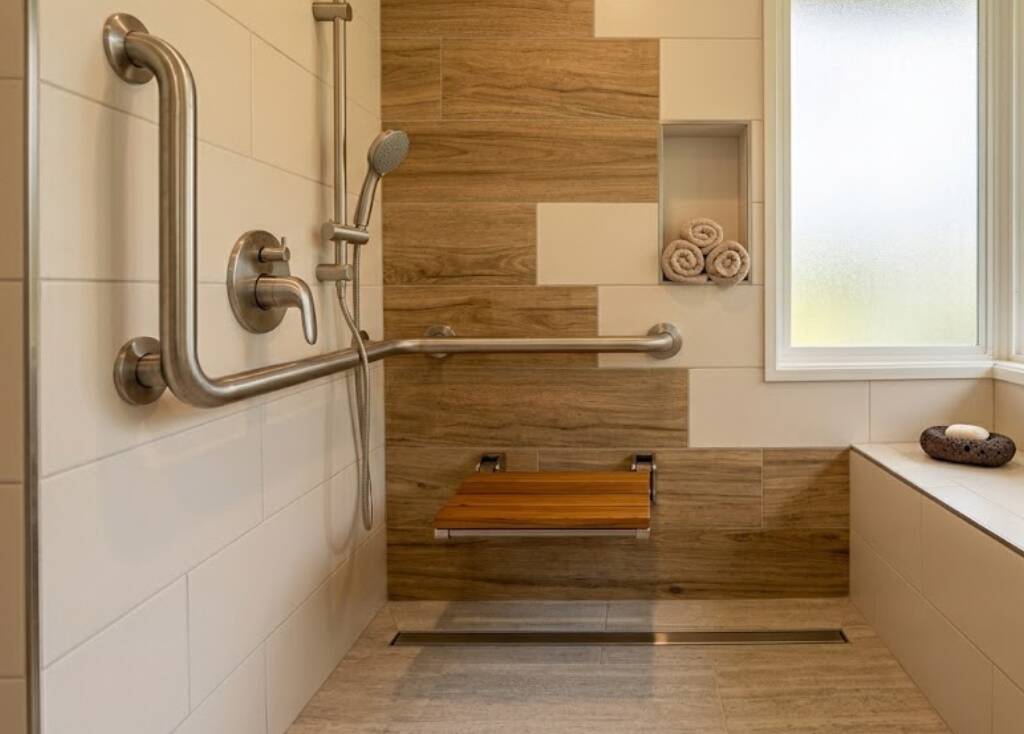
These two rooms are where most aging-in-place renovations focus, and for good reason. The bathroom is where falls are most likely to happen. The kitchen is where independence gets tested every day.
When considering bathroom remodeling, ask: Does the shower have a threshold you have to step over? Do the walls have blocking to support grab bars, or would adding them require opening walls? Can a caregiver stand alongside the person they’re assisting, or is the space too tight? Is the toilet at a height that allows for a comfortable sit-to-stand transition? Do the faucets require gripping and twisting, which can be painful for anyone with arthritis?
When considering kitchen remodeling, ask:
Can anyone in the household work at the counter while seated? Do the cabinets require reaching to the back of deep shelves? Are the stove controls at the front of the unit, where they’re easy to see and reach, or at the back, where a person would have to reach over the heat? Is the lighting strong enough for someone with reduced vision?
A CAPS-trained contractor can conduct this assessment alongside you and flag issues you wouldn’t know to look for.
What Should I Ask About Doorways, Hallways, and the Entry to My Home?
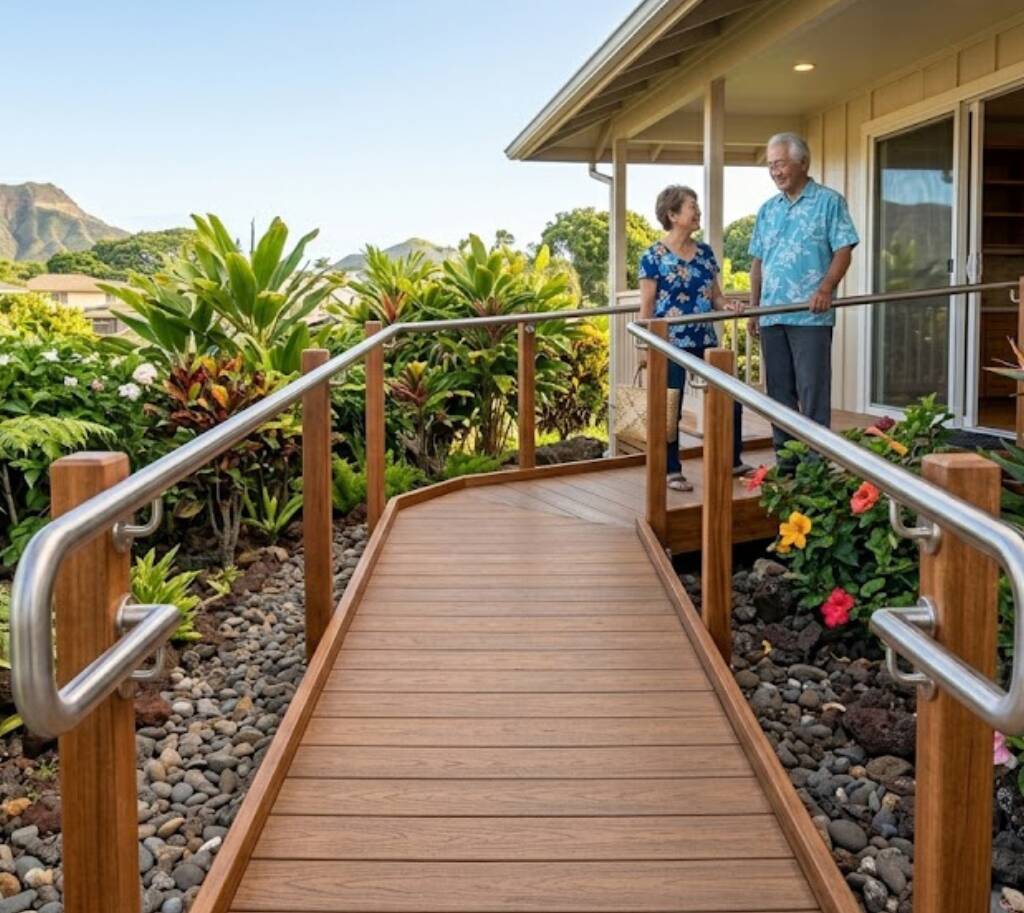
Ask whether your doorways are at least 36 inches wide. Standard Oahu home doorways from 50 or 60 years ago are often 28 to 30 inches wide, which won’t accommodate a wheelchair or a walker comfortably. Ask whether hallways allow for a 5-by-5-foot turning space in key areas. That’s the minimum a wheelchair needs to turn without obstruction.
For the home entry, ask whether there are steps at the front door or any other entry, and whether the lot and existing grade would allow a ramp or a no-step entry. Oahu lots are often small, and the existing grade can limit options, so a contractor needs to assess this in person.
These aren’t questions you can answer from a floor plan. They require someone who knows what to look for on Oahu properties specifically.
What Questions Should I Ask a Potential Aging-in-Place Contractor on Oahu?
Not every general contractor on Oahu has experience with accessibility and aging-in-place work. It’s specialized construction, and the wrong contractor can make modifications that look fine but don’t function as intended.
Does the contractor hold a CAPS designation? This certification requires specific training in accessibility design, barrier-free construction, and the needs of older adults. It’s not the only thing that matters, but it’s a meaningful baseline.
Can they show you a portfolio of completed aging-in-place projects on Oahu? Ask specifically for examples of accessible bathroom remodels, wider doorway installations, ADU builds, and home additions for multigenerational families.
Do they have references from local families who’ve completed similar projects? Do they understand ADA accessibility standards and how those apply to residential construction in Hawaii? How do they handle
Oahu’s permitting process? Can they build a phased project plan that lets you make progress without overextending financially?
What Questions Should I Ask About the Scope and Budget of My Renovation?
The first question to ask is what the minimum set of modifications would be to make the home safe and functional right now. In some cases, a targeted set of changes covers the most urgent needs at a fraction of the cost of a full remodel.
The second question is what structural work should be done during the current renovation to prepare for future needs. Installing blocking in bathroom walls during a remodel costs very little. Opening walls to add that blocking later costs significantly more.
Ask how a phased approach would work across your timeline, and what the recommended sequence of projects would be based on your household’s current and anticipated needs.
One framing that helps families make this decision clearly is that money spent on an Oahu home renovation builds equity. Nursing home or assisted living costs don’t. Homeworks Construction provides clear scope and cost estimates at the start of every project so families can make these decisions with real numbers in hand.
What Questions Should I Ask If I’m Considering an ADU or Home Addition Instead of Modifying Existing Rooms?
For some Oahu families, modifying an existing room isn’t the right answer. The spaces are too small, or the family wants to keep their kupuna close without sharing every living area.
Can the existing lot support a new structure? Oahu zoning rules, lot coverage limits, and setback requirements vary by neighborhood. A local design-build team will know what’s possible for your specific property before you invest time planning something that won’t get permitted.
If you build an ADU, will it be designed for aging in place from day one? A ground-floor ADU built with curbless showers, wider doorways, non-slip floors, and grab bar blocking from the start is a fundamentally better outcome than a standard unit retrofitted later.
How could the ADU serve multiple purposes over time? The best ones function as a rental unit first, an in-law suite when needed, and eventually caregiver quarters. Our portfolio includes a completed aging-in-place addition on Oahu that shows what thoughtful planning looks like in practice.
How Does Homeworks Hawaii Help You Answer These Questions and Plan Your Project?
Every project starts the same way: a site visit and a real conversation. We come to your home, walk through it with you, and ask the questions that matter.
As a design-build contractor, we handle the scope, design, permitting, and construction through a single team. Our CAPS designation means we ask the right accessibility questions from the start, including ones most homeowners haven’t thought of yet.
Knowing what questions to ask when planning aging-in-place renovations on Oahu is exactly what the first conversation with our team is designed to produce. You leave that meeting with a clearer picture of your home, your options, and what a realistic plan looks like.